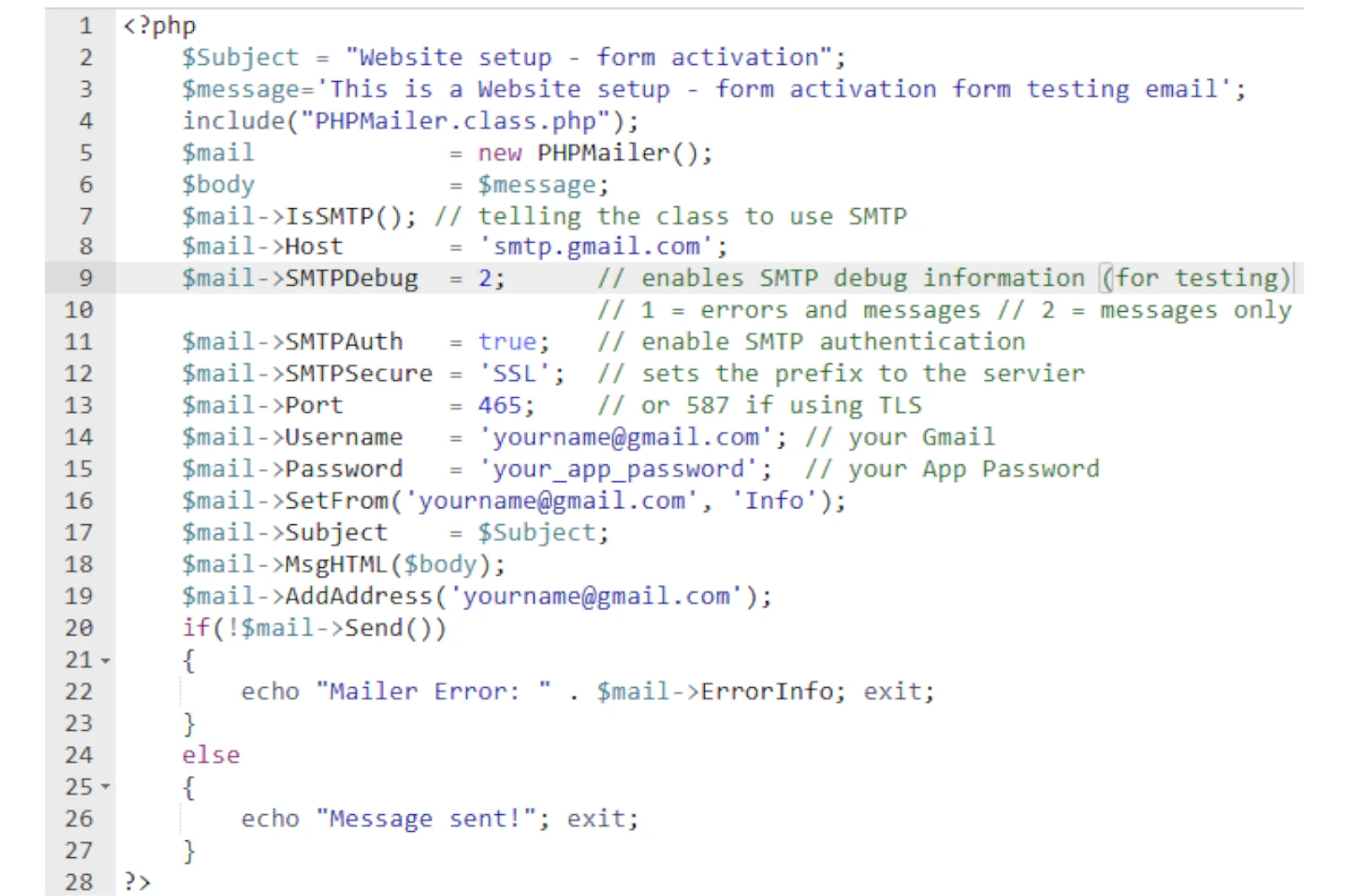
If you need to send emails using Office 365 SMTP credentials (e.g., from a website, app, or third-party email client), you must ensure certain settings are correctly configured both in Microsoft 365 and Azure. This guide walks you through the complete set
If you're integrating Microsoft 365 SMTP with custom applications, websites, or legacy systems, you may need to enable SMTP AUTH for specific mailboxes. Microsoft has updated several authentication and security configurations, so older setup methods may no longer work.
Follow the updated steps below to properly enable SMTP AUTH using PowerShell.
🧰 Prerequisites
Before starting, ensure you have:
Administrator access to Microsoft 365
Windows PowerShell installed
Internet connectivity to connect with Exchange Online
Please make sure to open PowerShell as Administrator before running the commands.
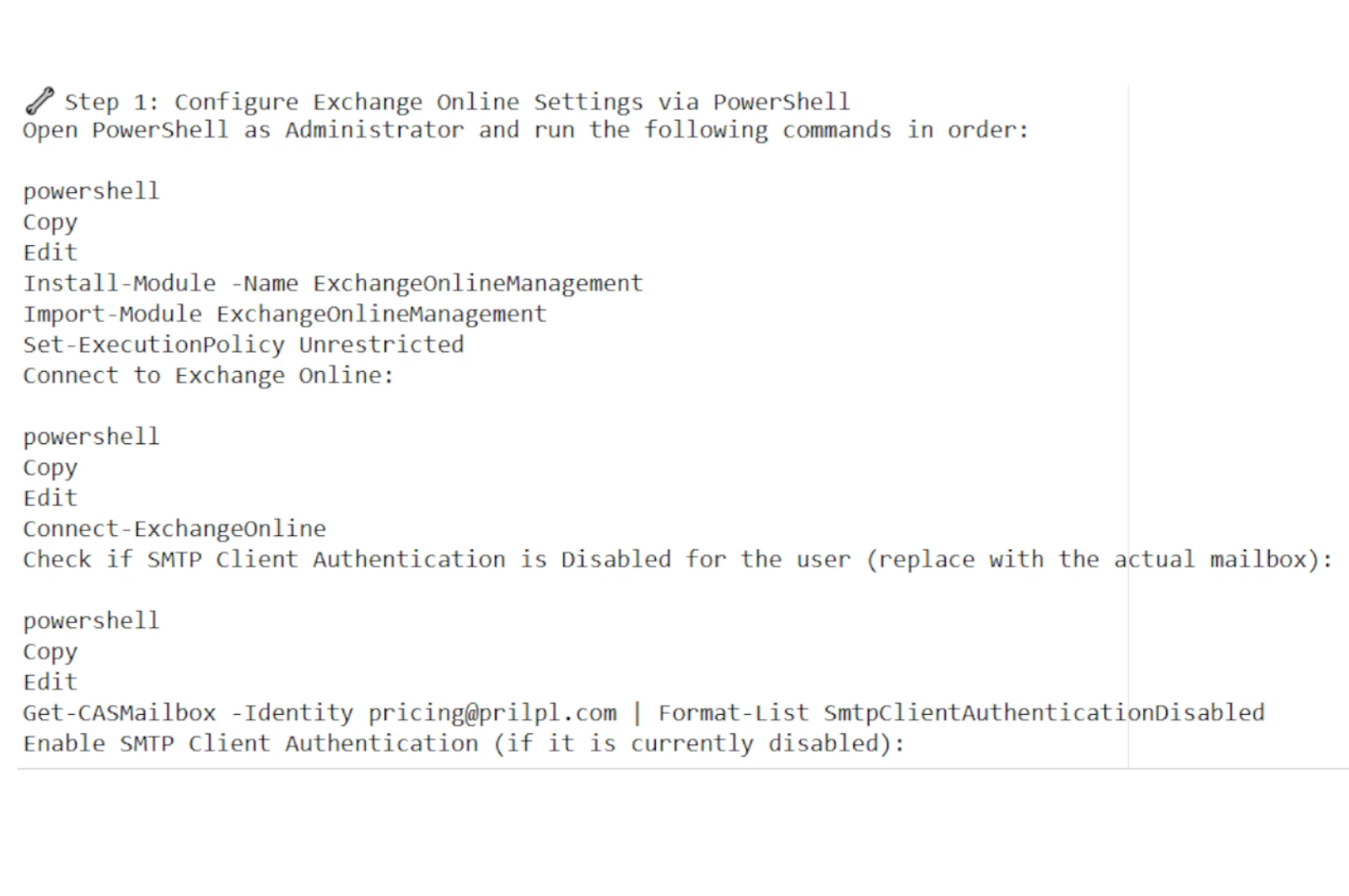
🔧 Step 1: Install Exchange Online Management Module
Run the following command:
Install-Module -Name ExchangeOnlineManagement
If prompted to install from an untrusted repository, type:
Y
and press Enter.
🔧 Step 2: Import the Module
Import-Module ExchangeOnlineManagement
Import-Module ExchangeOnlineManagement
🔧 Step 3: Set Execution Policy
If script execution is restricted, run:
Set-ExecutionPolicy Unrestricted
Confirm by typing:
Y
when prompted.
🔐 Step 4: Connect to Exchange Online
Connect-ExchangeOnline
Connect-ExchangeOnline
This command will prompt you to log in using your Microsoft 365 administrator credentials.
You can also connect directly using:
Connect-ExchangeOnline -UserPrincipalName admin@yourdomain.com
Replace admin@yourdomain.com with your Microsoft 365 admin email address.
📧 Step 5: Check Global SMTP AUTH Status
Run the following command:
Get-TransportConfig | Select SmtpClientAuthenticationDisabled
Understanding the Result
True → SMTP AUTH is disabled globally.
False → SMTP AUTH is enabled globally.
True → SMTP AUTH is disabled globally.
False → SMTP AUTH is enabled globally.
✅ Step 6: Enable SMTP AUTH for a Specific Mailbox
To enable SMTP AUTH for a specific user mailbox:
Set-CASMailbox -Identity user@yourdomain.com -SmtpClientAuthenticationDisabled $false
Replace user@yourdomain.com with the actual mailbox email address.
🔍 Step 7: Verify SMTP AUTH Status
Run the following command to confirm the configuration:
Get-CASMailbox -Identity user@yourdomain.com | Select SmtpClientAuthenticationDisabled
Expected Result
False
False
This means SMTP AUTH is successfully enabled for that mailbox.
✅ Configuration Complete
SMTP AUTH is now enabled for the selected mailbox, and you can use Microsoft 365 SMTP settings within your applications, contact forms, ERP systems, or legacy integrations.
This updated method aligns with Microsoft’s latest Exchange Online security and authentication policies.